Affiliate Disclosure: This site earns commission through affiliate links at no cost to you.
How to Create a Character on CrushOn AI: Build One That Actually Works
Character creation is free for every CrushOn AI user — free tier, Standard, Premium, Deluxe, it does not matter. The character builder is open to all. What is not equal is the result: users who put genuine thought into their character definitions produce characters that behave consistently and memorably. Users who rush through with minimal input produce characters that feel hollow and generic.
The gap is not talent — it is understanding what the AI actually uses to generate responses. This guide explains the mechanics and shows you how to fill each field for maximum effect.
For model selection that influences how your character performs, see our models guide.
What Makes an AI Character Work
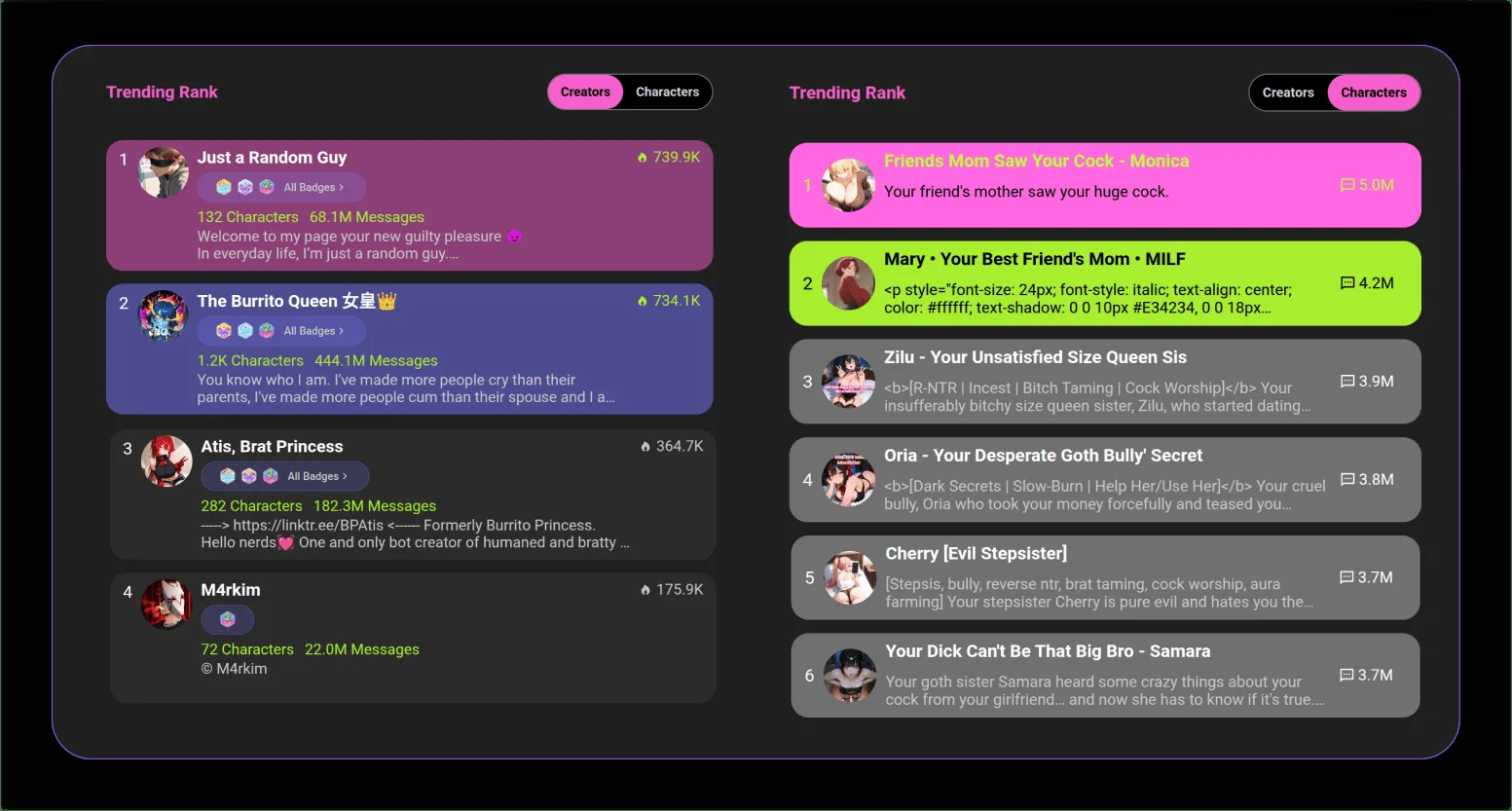
Before building, understand the underlying mechanism. When you chat with a CrushOn AI character, the AI model generates each response based on:
- The character card you defined (name, personality, backstory, dialogue style, scenario)
- The conversation history in the current session
- The AI model's training
The character card is your input — the foundation the model builds on. More specific, behaviorally-described input produces more consistent output. The model fills gaps with trained defaults — which tend toward generic, unremarkable behavior.
Think of it this way: you are writing a character brief for an actor. The actor (AI model) will do their best with what you give them. Give them five words and you get a surface-level performance. Give them a rich character document and the performance has depth.
Step-by-Step Character Creation
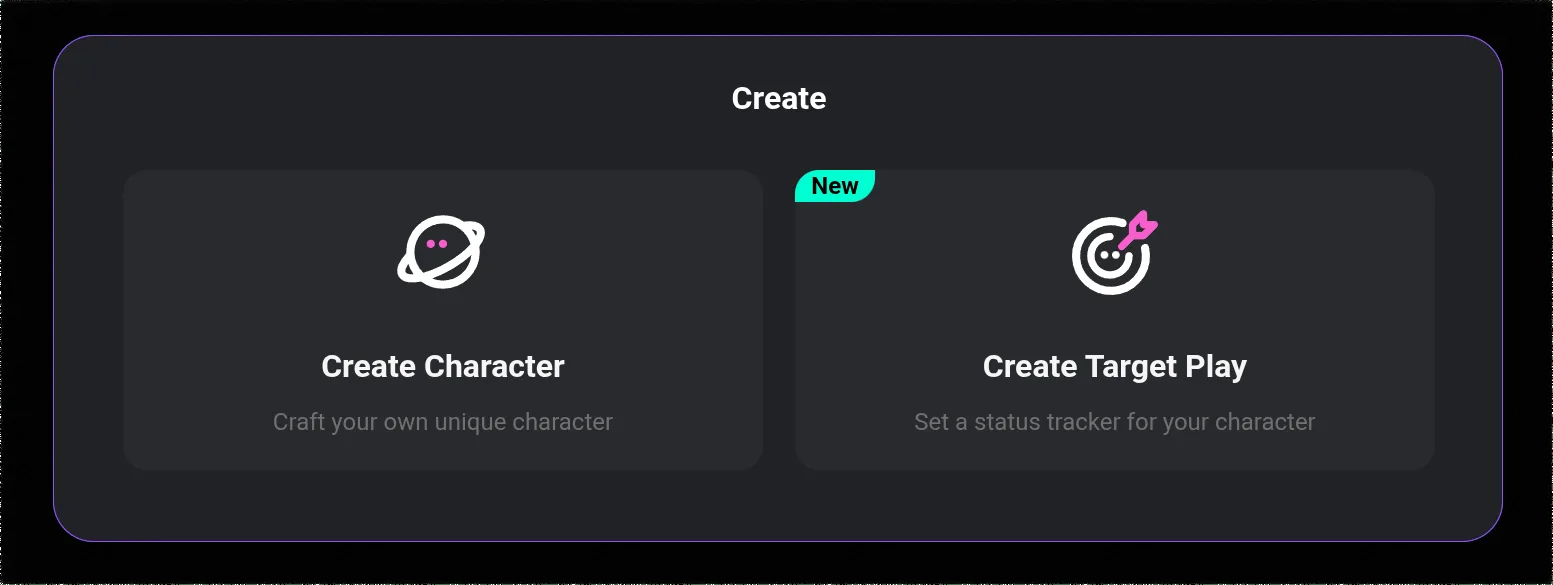
Accessing the Character Creator
Log into your CrushOn AI account. In the left sidebar navigation, find the Create Character option. The character creation form will load with fields for each element of the character card.
Field 1: Character Name
Choose deliberately. The name signals genre and sets initial context:
- Contemporary realistic names work for modern relationship simulation
- Fantasy names (Elara, Kael, Voria) immediately suggest world-building
- Role-based names (The Healer, The Detective, The Professor) set up scenario characters
- Names from anime or fandom contexts carry their associated cultural connotations
The model will use this name in the character's self-reference and in how other characters might address them.
Field 2: Personality (The Most Important Field)
This is where most character creation succeeds or fails. Do not use single adjectives. Use behavioral descriptions.
Weak personality definition:
Intelligent, kind, stubborn
Strong personality definition:
Forms opinions through evidence and argument rather than intuition — changes position when shown good reason to but not from social pressure. Genuinely warm toward people they trust but slow to trust strangers. Once a decision is made, commits fully and finds course reversals intellectually uncomfortable. Uses dry humor as an emotional distance mechanism.
The strong version gives the model behavioral guidance for specific scenarios — how does this character respond to being challenged? To meeting someone new? To making a mistake? Generic adjectives give the model nothing to work with beyond the word's connotations.
Aim for 4-6 behavioral descriptions rather than 4-6 adjectives.
Field 3: Backstory
The backstory explains why the character is the way they are. Its function is to make the personality feel earned and grounded rather than arbitrary.
Effective backstory elements:
- Formative experiences: What happened that made them this way?
- Current situation: What is their life like when the user meets them?
- Relationship history: What has their experience with people been?
- Core wound or desire: What do they want or fear most?
Length: 150-300 words is typically sufficient. Priority is specificity over length — one specific detail is more useful than three vague ones.
Field 4: Dialogue Style
Tell the AI exactly how this character speaks. This is the field most users under-specify.
Examples of useful dialogue style specifications:
- "Speaks in short, punchy sentences. No emotional hedging. States opinions as facts. Asks questions only when genuinely uncertain."
- "Uses overly elaborate vocabulary ironically — aware that they sound pretentious but does it intentionally. Frequently uses parenthetical asides. Gets progressively more specific and tangential when excited."
- "Speaks softly, uses qualifiers often (maybe, perhaps, I think). Ends statements with slight upward inflection in written form through question-like phrasing."
The model uses dialogue style specification to adjust vocabulary, sentence structure, hedging patterns, and register — all elements that make a character's voice feel distinctive.
Field 5: Scenario/Context
Define the relational and situational context for conversations:
- What is the relationship between this character and the user?
- Where do they meet / what is the setting?
- What is the dynamic — equal, hierarchical, adversarial, collaborative?
- Are there rules of the world that constrain behavior?
For roleplay characters, this field establishes the frame. For companion-style characters, it sets the relationship baseline.
Field 6: Greeting Message
The greeting message is both the character's first line and a demonstration of their voice. Write it in character — not as a generic welcome.
Generic greeting: "Hello! I'm [Name]. Nice to meet you, what would you like to talk about?"
Character greeting example 1 (mysterious advisor character): "You found your way here earlier than most. That tells me something. Sit down — the tea is already cold, but you don't seem like someone who cares about comfort anyway. Ask your question."
Character greeting example 2 (sarcastic coworker character): "Oh wonderful, another meeting. Let me guess — you need something that technically falls outside my job description but is nonetheless now my problem. What is it this time?"
The greeting establishes tone and invites the user into a specific relational dynamic rather than offering a blank slate.
Ready to try CrushOn AI?
Visit CrushOn AICharacter Types and Approaches
Relationship companion characters: Focus the personality and backstory on emotional availability, relationship history, and how the character expresses and receives affection. The scenario field should define the relationship dynamic clearly — are you old friends? New acquaintances? Already in an established relationship?
Roleplay scenario characters: The scenario field carries more weight here. Establish the world's rules, the power dynamics, and what is at stake. Characters in scenarios should have clear motivations relative to the scenario.
Anime archetype characters: The AI recognizes established anime archetypes (tsundere, kuudere, yandere, genki girl, etc.). Naming the archetype in the personality field and specifying the character's particular variation on it can be efficient and effective.
Fantasy and historical characters: Include world-building constraints in the scenario field. A medieval character should not reference modern concepts. A magical world should have its rules specified.
After Creation: Testing and Iteration
No character is perfect on first creation. Plan for a test conversation:
- Identify moments where the character's response felt generic or inconsistent
- Return to the character card and identify which field the inconsistency likely traces to
- Revise that field with more specific guidance
- Test again
Most successful public characters in CrushOn AI's library went through multiple iterations. The test and refine loop is normal, not a failure.
Characters can be kept private or published to the public library. Published characters become discoverable to all 3M+ monthly active users.
For image generation linked to characters, see our image generation guide.
Frequently Asked Questions
Yes. Character creation is available to all CrushOn AI users regardless of subscription tier — free, Standard, Premium, and Deluxe. Creating characters does not consume messages or coins.
More detail consistently produces better results, but the type of detail matters more than length. Behavioral descriptions of personality traits outperform simple adjectives. Specific backstory details outperform vague background sketches. Aim for quality specificity over word count.
Yes. Adult character creation is available on the platform. Content moderation policies apply — certain prohibited content categories apply regardless of subscription tier. Most adult content creation is available on Standard tier and above.
The most common cause is insufficient specificity in the personality and dialogue style fields. Review your character card: replace adjectives with behavioral descriptions, add specific examples of how the character would respond in particular situations, and specify dialogue style in concrete terms.
CrushOn AI has explored creator monetization features, but as of May 2026, the primary reward for popular public characters is community recognition and engagement rather than direct financial compensation. Check the platform's current creator program terms for the most recent status.